

Poets Raise a Collective Voice for Religious Tolerance and Humanity
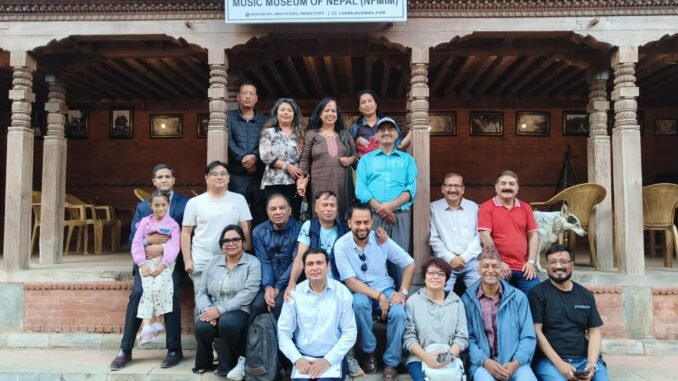
Kathmandu, August 2 — A special literary program titled “Dharmik Sahishnuta ra Bartaman Kavita” was jointly organized by the Bartaman Kavita Group and the Nepali Folk Musical Instruments Museum. Held at the museum premises in Lakshmeshwar Temple, the event featured poetry recitations, discussions, and musical performances centered on religious tolerance, social harmony, humanity, and contemporary social realities.
During the program, poets including Abhay Shrestha with “Bhikshuni ra Rogi Yuwak”, Harihar Timilsina with “Malai Thaha Bhayeko Kura”, Bishwa Sigdel with “Ma Ek Thok Banina”, Rajanimila with “Afubhitrako Ishwarlai Jagau”, Ramgopal Ashutosh with “Agolai Ago Huna Kasai Ko Jaruri Hudaina”, Radhika Kalpit with “Marga Anek, Gantabya Ek”, Rami Priya with “Manis ra Dharma”, Prajwal Adhikari with “Khelouna”, Ishwara Shiva with “Ishwarko Hisab”, Chachu Dhungana with “Nara”, Bina Nemkul with “Sundar Basti”, Chandra Bahadur Lama with “Sahishnutako Shashwata Niyam”, Tirtharaj Bhatt with “Ke Hami Punah Buddha Banna Sakchhau?”, Pramod Snehi with “Dharmayuddha”, and Deepak Chaulagain with “Manisko Khoji” presented their poems. Their works reflected themes of religious tolerance, social responsibility, human compassion, and the complexities of contemporary life.
Renowned singer and composer Shishir Yogi added a musical dimension to the event by performing songs including “Damai Dai”, written by Nepal’s great poet Laxmi Prasad Devkota.
Participants, including poets, writers, and speakers, expressed concern over acts of disorder and intolerance being carried out in the name of religion in Nepal’s Tarai region. They urged citizens to stand firmly for humanity against violence, division, and cruelty while calling for the strengthening of peace, coexistence, mutual respect, and religious tolerance.
According to Bishwa Sigdel, member of the Bartaman Kavita Group, the organization has consistently used poetry as a platform to engage with pressing social issues. He said the group has previously organized special literary programs such as “Bisphot Pachhiko Shunyatama Aawaj” following the country’s political transition, “Harit Kavita Bishesh” focusing on environmental awareness, “Shantika Kavita” opposing war and cruelty, and “Bhuimancheka Kavita” highlighting the lives and struggles of working-class and marginalized communities.
Following the program, participating poets and artists toured the Nepali Folk Musical Instruments Museum. Museum founder Ram Prasad Kandel spoke about the close relationship between Nepal’s folk musical heritage, music, art, and literature, stating, “Poets are a reflection of sages; they must never stop speaking the truth.” He also announced that, in collaboration with the Bartaman Kavita Group, the museum will host regular literary programs every month.
According to the organizers, the event successfully brought together literature, music, and social consciousness, delivering a strong message of religious tolerance, social harmony, and shared humanity.